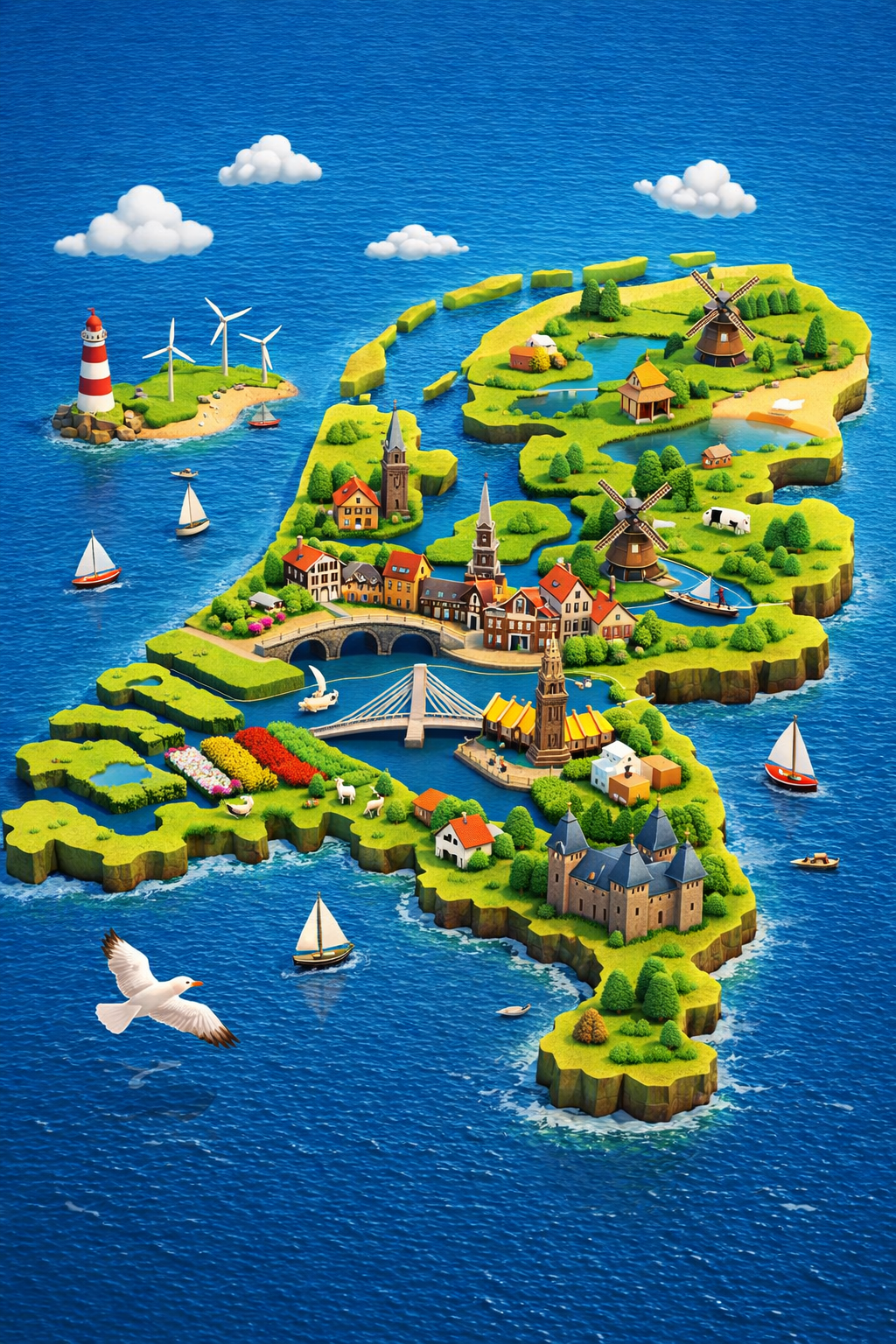
Why People from the Netherlands Are Called “Dutch”
Why Are People from the Netherlands Called Dutch?
Short answer: history messed up, English shrugged, and nobody fixed it.
Long answer: buckle up. This is a centuries-old linguistic accident that somehow survived wars, empires, spelling reforms, and the invention of autocorrect.
First of All: The Dutch Did Not Choose This Name
Important clarification for our national reputation:
- The country is called the Netherlands
- The people are called the Dutch
- The language is called Dutch
- None of this matches, and no, we did not vote on it
If we had chosen our own name, it would probably be something practical like
“People Who Mind Their Own Business and Cycle Everywhere.”
The Word “Dutch” Comes From “Deutsch”
(Yes, Germany Is Involved. Sorry.)
Back in the Middle Ages, people in Northern Europe used a word like “diutisc”, meaning:
“The language of normal people, not Latin-speaking priests.”
Over time, this word evolved into:
- Deutsch → Germany
- Diets → The Netherlands
At this point, English speakers looked across the North Sea and thought:
“You all sound similar. Congratulations. You are now all Dutch.”
This was not a discussion. This was a labeling decision.
English Efficiency Strikes Again
Eventually, English cleaned things up… sort of:
- Germans became Germans
- Austrians became Austrians
- Swiss became Swiss
- People from the Netherlands stayed Dutch, because… reasons
Why fix a mistake when it’s already printed in dictionaries?
Why Not “Netherlandish”?
Excellent question. Several likely reasons:
- “Netherlandish” sounds like a medieval disease
- “Nether” makes English speakers nervous
- “Low Country Person” sounds like a western movie extra
So Dutch stayed. Short, catchy, wrong. A branding nightmare we now embrace.
Does the Dutch Language Actually Sound Like German?
To non-Dutch ears? Absolutely.
To Germans? Absolutely not.
To Dutch people? Also no, but we’ll explain it anyway.
Dutch sits awkwardly between English and German, like:
- German’s relaxed cousin
- English’s throatier uncle
- A language that refuses to fully commit
Which somehow convinced English speakers centuries ago that naming us all the same was “close enough.”
The Damage: Dutch Expressions in English
Thanks to this naming chaos, English gained some interesting phrases:
- Going Dutch → splitting the bill (accurate, we hate owing money)
- Dutch courage → alcohol (unfortunately accurate)
- Double Dutch → confusing nonsense (deeply offensive but fair)
Strangely, there is no phrase called “Dutch efficiency”, despite overwhelming evidence.
Do People from the Netherlands Mind Being Called Dutch?
No.
Correcting everyone would take effort, and effort is suspicious.
The Dutch response to being misnamed is generally:
“Eh. It works.”
This is the same nation that:
- Lives below sea level
- Trusts dikes with its life
- Eats raw herring in public
We have bigger problems.
So Why Are People from the Netherlands Called Dutch?
Let’s summarize for Google and humanity:
- The word comes from an old term meaning “people language”
- English used it for everyone nearby
- Everyone else fixed it
- The Netherlands didn’t
- Now it’s too late
The result? A linguistic error older than the United States that nobody dares correct.
Final Verdict
People from the Netherlands are called Dutch because:
- History was chaotic
- English was lazy
- And the Dutch didn’t complain loudly enough
And honestly?
We’re fine with it. We have bikes, cheese, and healthcare.
Call us whatever you want.(And Why the Dutch Themselves Find This Both Confusing and Slightly Amusing)